YOUR FIRST TAROT
Your first
Tarot reading
Why not begin by drawing just one card?
Even when Tarot interests you, it is natural to have many questions at the beginning.
- “What should I ask about?”
- “Do I have to memorize the card meanings?”
- “How many cards should I draw?”
- “How do I read the cards I get?”
But you do not need to learn anything difficult before you start.
A MIRROR, NOT ONLY A FORECAST
What do we do with Tarot?
You may think of Tarot as something used to predict the future. And, of course, you can draw cards to consider what may happen next.
But that is not all Tarot can do.
What do I want to value most right now?
What might I be overlooking here?
What should I keep in mind to make today feel good?
You can offer questions like these to the cards. Use the pictures, symbols and meanings as a starting point for seeing your feelings and circumstances from a slightly different angle. That, too, is one way to enjoy Tarot.
ONE CARD READING
Begin by drawing one card
Set difficult spreads and specialist terms aside for the moment. The best place to begin is a one-card reading.
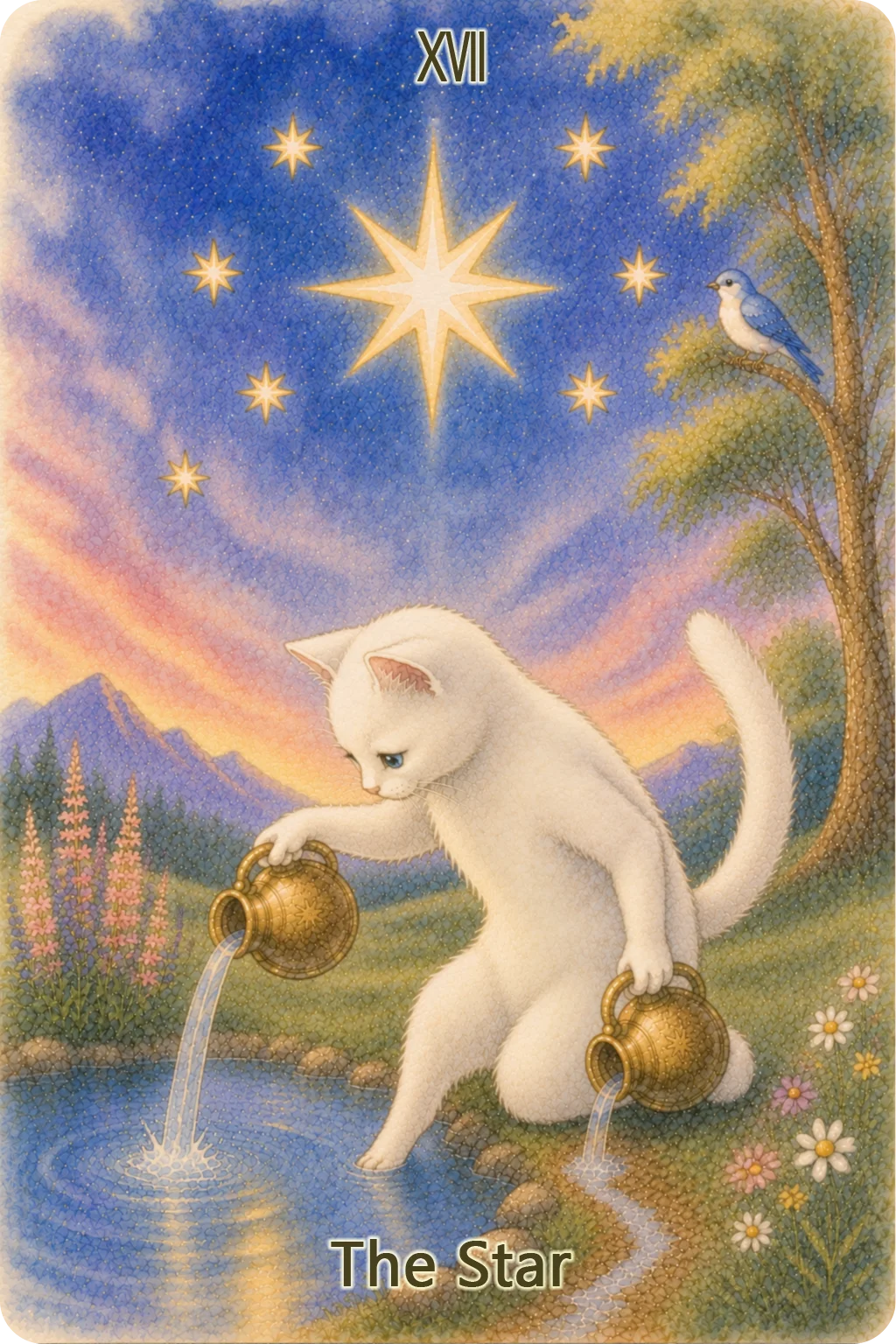
What matters most today?
The Star XVII
Imagine that you draw the Star. Some of its meanings are:
- Hope
- A calm outlook
- Being yourself
- Faith in the future
Today I will not rush toward a result. I will remember the hope a little farther ahead.
That would be a perfectly good way to receive it. Or perhaps you look at the picture and feel, “It is so quiet and peaceful. Maybe I should not hurry today.” That is also a valid reading.
What did you feel when you saw the card?That is part of what makes Tarot interesting.
READ AS YOU GO
It is fine if you have not memorized the meanings
Trying to memorize all 78 cards before you begin is a demanding task in itself.
In NTTarot, you can open an explanation directly from the card you drew. See upright and reversed meanings and explore the card from several angles, including love, work and relationships.
Explore all 78 Tarot cards
FROM ONE CARD TO THREE
When you are ready, draw several cards
Once a one-card reading feels familiar, laying out a few cards makes Tarot even more interesting.
01
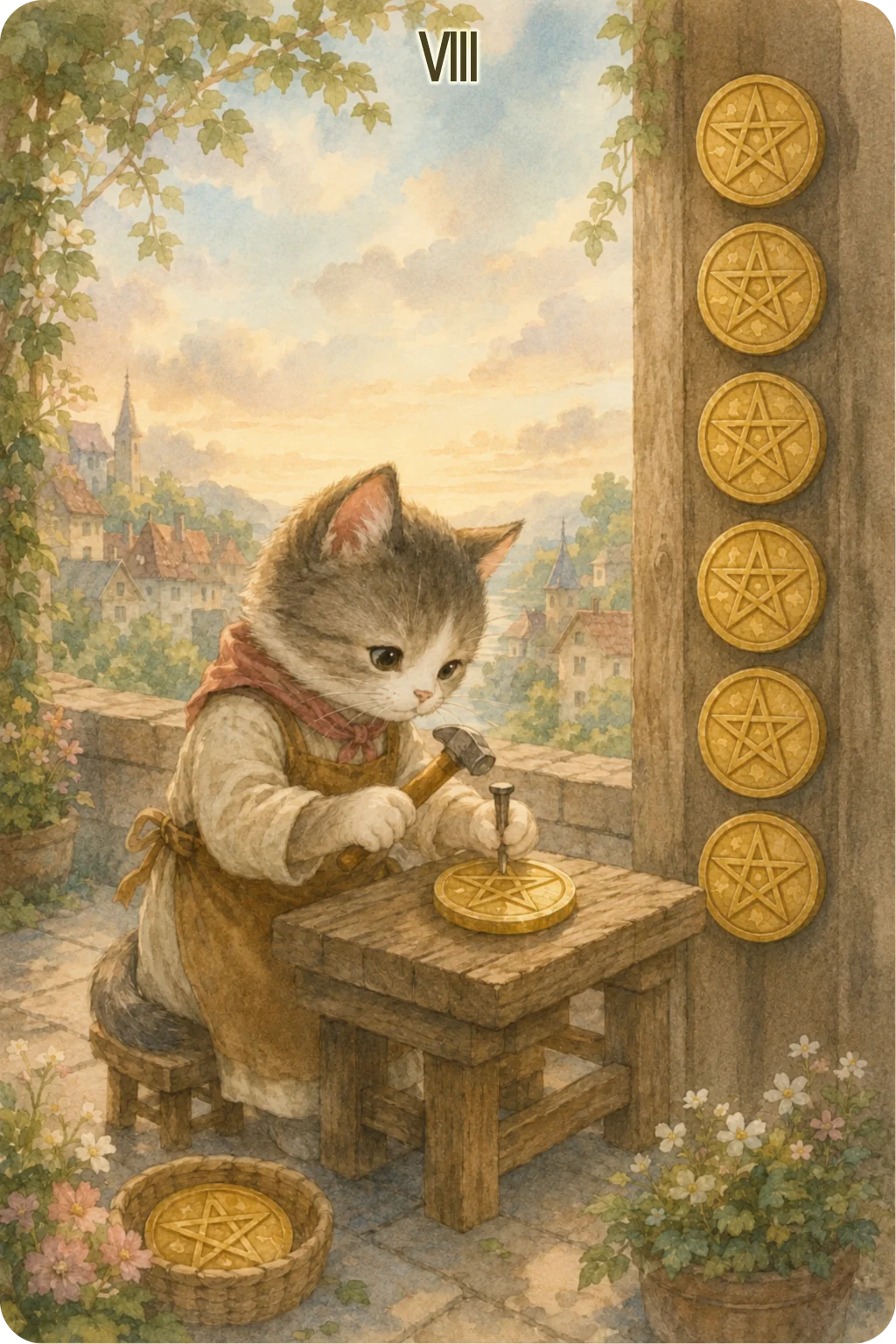
Where things stand
Eight of PentaclesEffort and developing skill
02
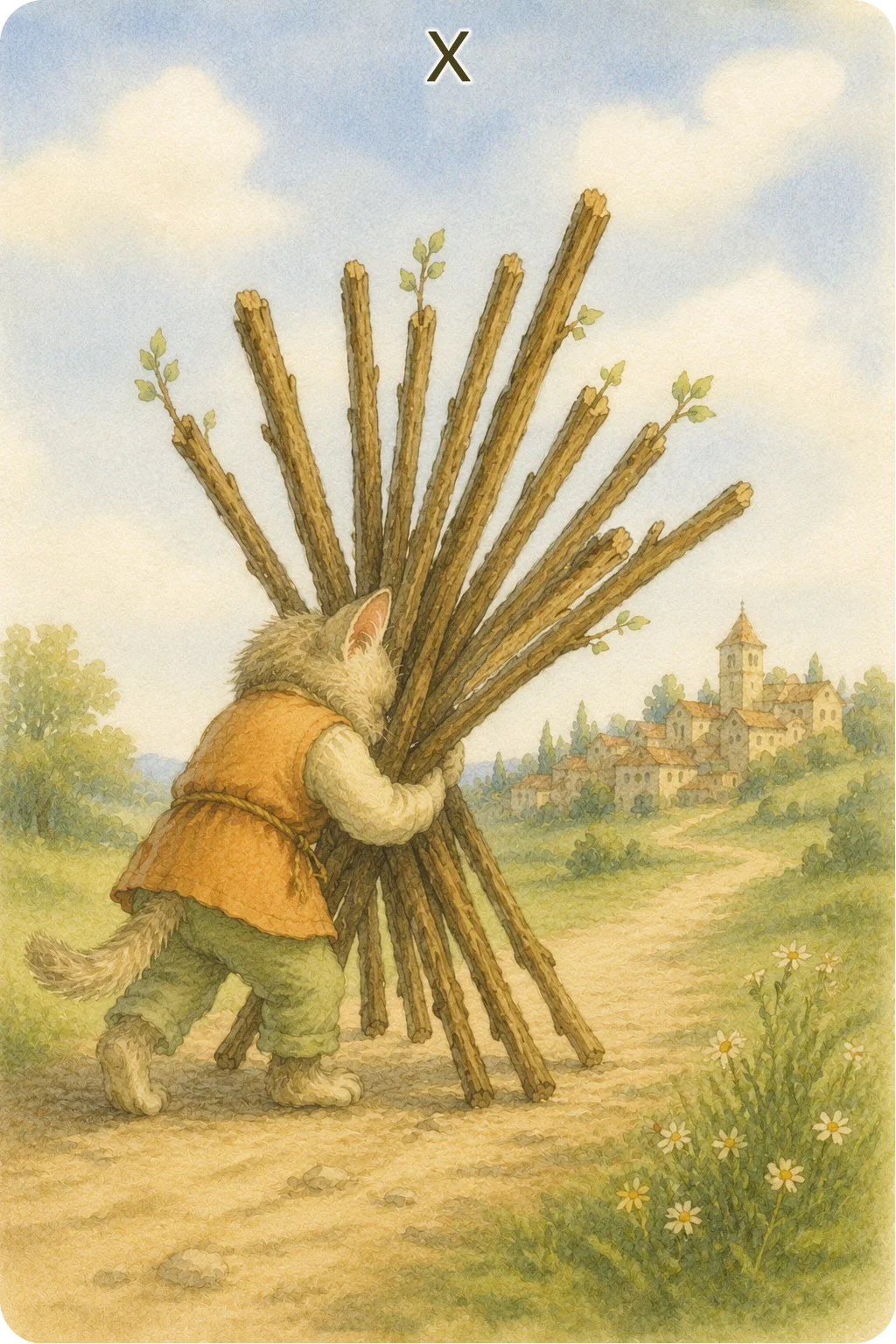
What to watch
Ten of WandsTaking on too much responsibility
03
What to keep in mind next
The StarHope and future possibility
This is a time of steady, serious effort. But perhaps I have been trying a little too hard. I can keep moving without carrying everything alone, and without forgetting where I hope to go.
CARD POSITIONS
What is a “spread”?
A spread is a way of laying out cards in which each position has a role, such as “where things stand,” “what to watch” or “what to keep in mind next.”
Well-known examples include the three-card spread and Celtic Cross. But you do not have to use a fixed form.
To look at yourselfWhere I am now / What do I really want? / What can I do tomorrow?
To look at a relationshipMy feelings / Their feelings / The relationship between us
NTTarot lets you set card positions and their meanings freely. You can create your own arrangement for the question at hand.
Explore spread types and how to make themUPRIGHT & REVERSED
What do upright and reversed mean?
In Tarot, a card may appear upside down. Its ordinary orientation is called upright; upside down is called reversed.
A reversed card does not always have a bad meaning.
Upright“Moving forward”
Reversed“Wanting to move, but hesitating”
The same theme may be weakened or turned inward; sometimes a reversal can even suggest that a problem is beginning to ease. NTTarot's card explanations show several possibilities for reversed cards as well.
CONNECT THE CARDS
Connect the cards like a story
When you draw several cards, do not stop after looking up each meaning separately. Look at the movement between them.
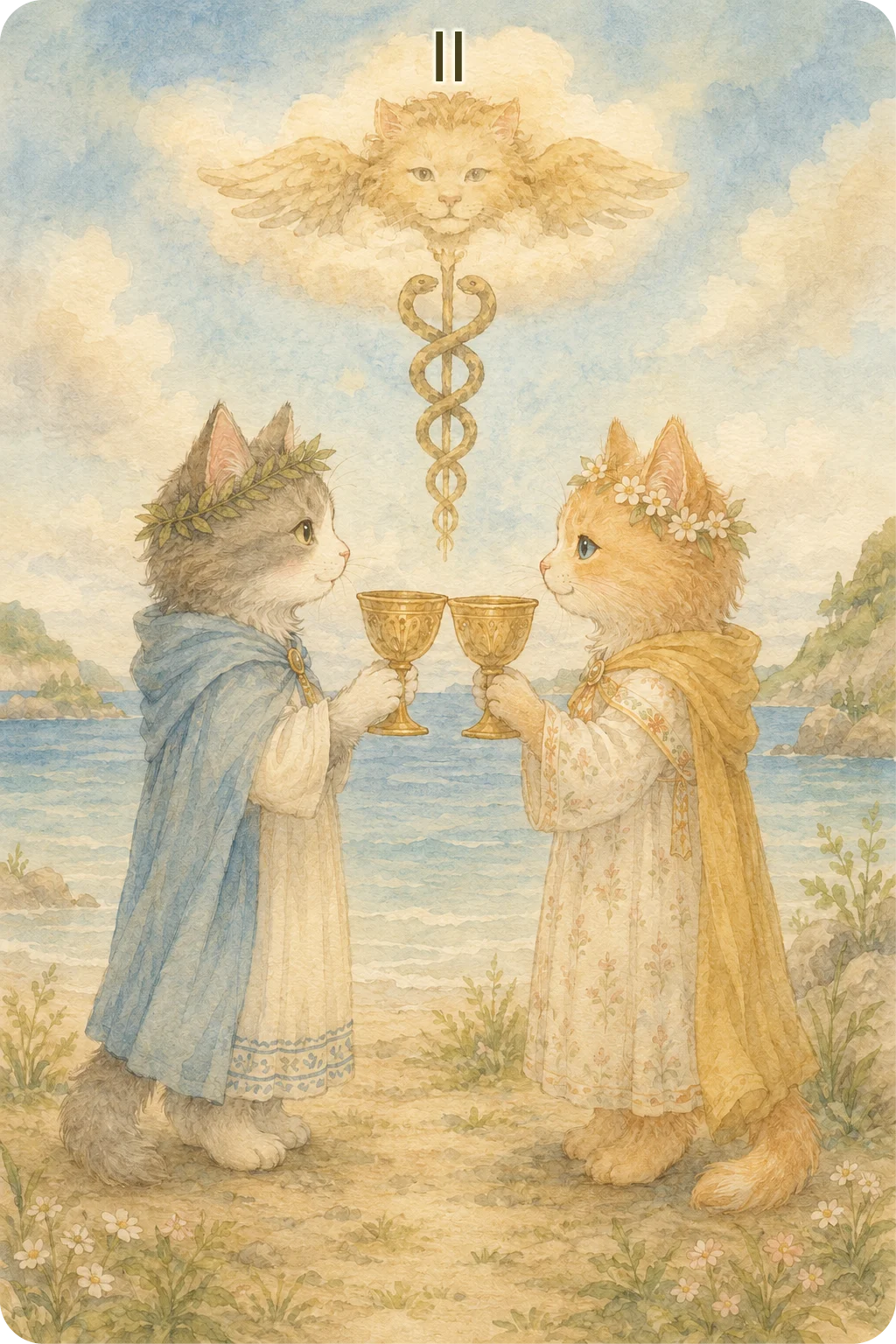
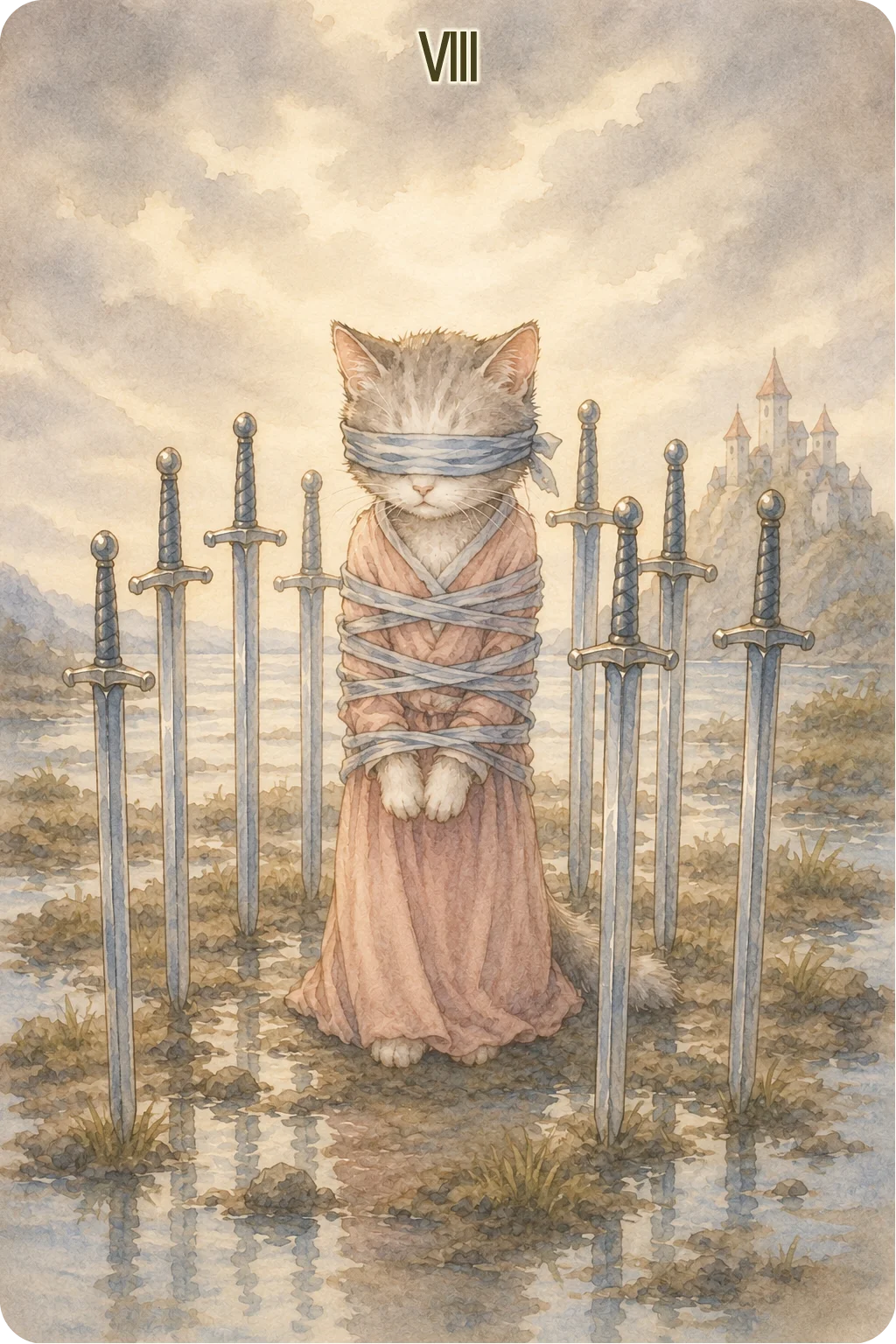
There is an important relationship. The beliefs that have confined me within it are beginning to loosen, and beyond them I am finding hope.
A SECOND POINT OF VIEW
When you are unsure, think it through with AI
Sometimes you read every card meaning but still cannot see how they fit together.
NTTarot can gather your question, spread and drawn cards into a prompt you can give to an AI.
“How might I understand this card in this position?”
“What reading emerges when I consider all three cards together?”
You can take that prompt to ChatGPT or another AI and discuss the reading. You do not have to treat the AI's answer as correct. Use it as one source of ideas for finding a perspective you had not considered yourself.
EXPLORE AT YOUR PACE
What you can do with NTTarot
You do not need to use everything from the start. Try the features that interest you, a little at a time.
- Read freely, from a single card to a complex spread
- Read detailed explanations of all 78 Tarot cards
- Explore both upright and reversed meanings
- Create your own spreads
- Edit images and explanations to create your own deck
- Save reading results
- Create an AI explanation prompt with ease
- Read with all 36 Lenormand cards
YOUR READING, YOUR WORDS
You do not have to search too hard for the “correct” reading
Tarot has gathered many meanings and reading traditions over its long history. But there is no rule that says, “When this card appears, this must be the answer.”
Consider the same Star card in a question about work, a question about love and a question about how to spend the day. It is likely to feel a little different each time.
You may use the card explanation. You may value what the picture made you feel. You may think it through with an AI.
NTTarot was not made to impose an answer. It is a tool for meeting the cards yourself and looking for an answer in your own words.
DRAW YOUR FIRST CARD
Now, draw one card
There is no need to overthink it. Begin with a single question.
- What do I want to value today?
- What do I need right now?
- What should I keep in mind this week?
Once you have your question, see which card comes to meet you.
Draw a card in NTTarot