When you want a clear focus
For short, specific questions such as today's theme or one step you can take now.
SPREAD GUIDE
Tarot lays out an order for exploring a question; Lenormand reveals connections between cards. This guide introduces layouts and reading methods suited to each system.
HOW TO CHOOSE
A more complex spread does not necessarily produce a better answer. Clarify what you want to know now, then choose only the perspectives you need.
Spreads come in many forms and interpretations, and the layouts here are only examples. You are free to change the meaning of each position to suit your question and reading style.
For short, specific questions such as today's theme or one step you can take now.
For change over time, cause and advice, or comparing two possible choices.
For a wider view of several factors, including background, surroundings, inner state and outlook.
TAROT SPREADS
In Tarot, each place where a card is laid has a role such as “present situation,” “obstacle” or “advice.”
ONE CARD
One question and one symbol. Without adding confusion, this spread brings the perspective that matters most right now into focus.
Questions it suits What would be helpful to keep in mind today? / What is the first step I can take in this situation?
TWO CARDS
A simple, adaptable layout that looks at one question from two perspectives. This example uses “present situation” and “advice.”
Other combinations You can replace these with self / other person, strength / point of caution, option A / option B, and many more.
THREE CARDS
A foundational three-card spread that organizes events as a flow through time. Change the positions and it can also become cause, current situation and advice.
Questions it suits How is this relationship changing? / What should I know as I move this plan forward?
FOUR CARDS
This layout organizes the present and reads a continuous path from the cause of a difficulty to the next step. When three cards are not quite enough, it adds one more perspective.
Questions it suits How can I move beyond this standstill? / What should I review in order to move toward my goal?
TWO PATHS
Rather than declaring A right and B wrong, compare what each choice offers and what each asks you to watch. This five-card layout places your current position in the center and uses two cards for each path.
Questions it suits Which of two jobs should I choose? / I want to compare taking action with waiting.
RELATIONSHIP
Lay out the feelings and perspectives of two people to explore a relationship that is hard to understand from only one side. This six-card example works not only for romance but also for family, friends and professional relationships.
Reading tip Do not treat the cards as proof of the other person's inner life. Read them as perspectives that can help you understand differences and care for the relationship.
HORSESHOE
Seven cards form a horseshoe and give a broad view from the past to the outlook. Traditions differ in the meaning and order of the positions; this is one common example.
Questions it suits I want to understand the whole situation and where it may be going. / I want to organize several factors in a clear sequence.
CELTIC CROSS
This well-known ten-card spread looks at one subject from many angles. Use it when you want to understand the structure of a situation carefully rather than reach a simple conclusion. There are many traditions for the Celtic Cross, with different placement orders and meanings; this is one common example.
Questions it suits I want the complete picture of a long-running concern. / I want to organize a situation with several intertwined factors.
LENORMAND READING
Lenormand does not usually assign a detailed role to every position. Instead, nearby cards combine to make the meaning more concrete. Reversed cards are not normally used.
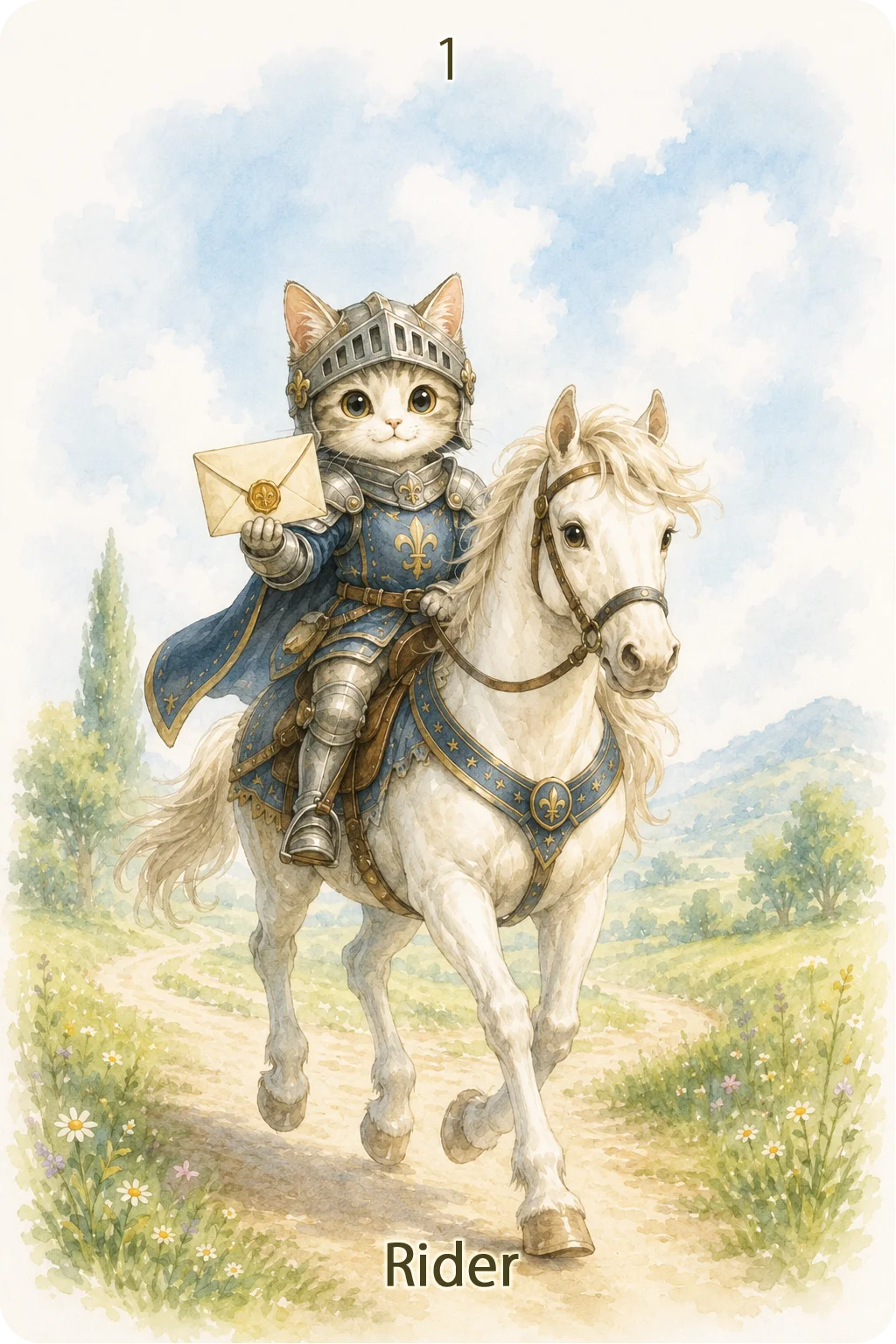
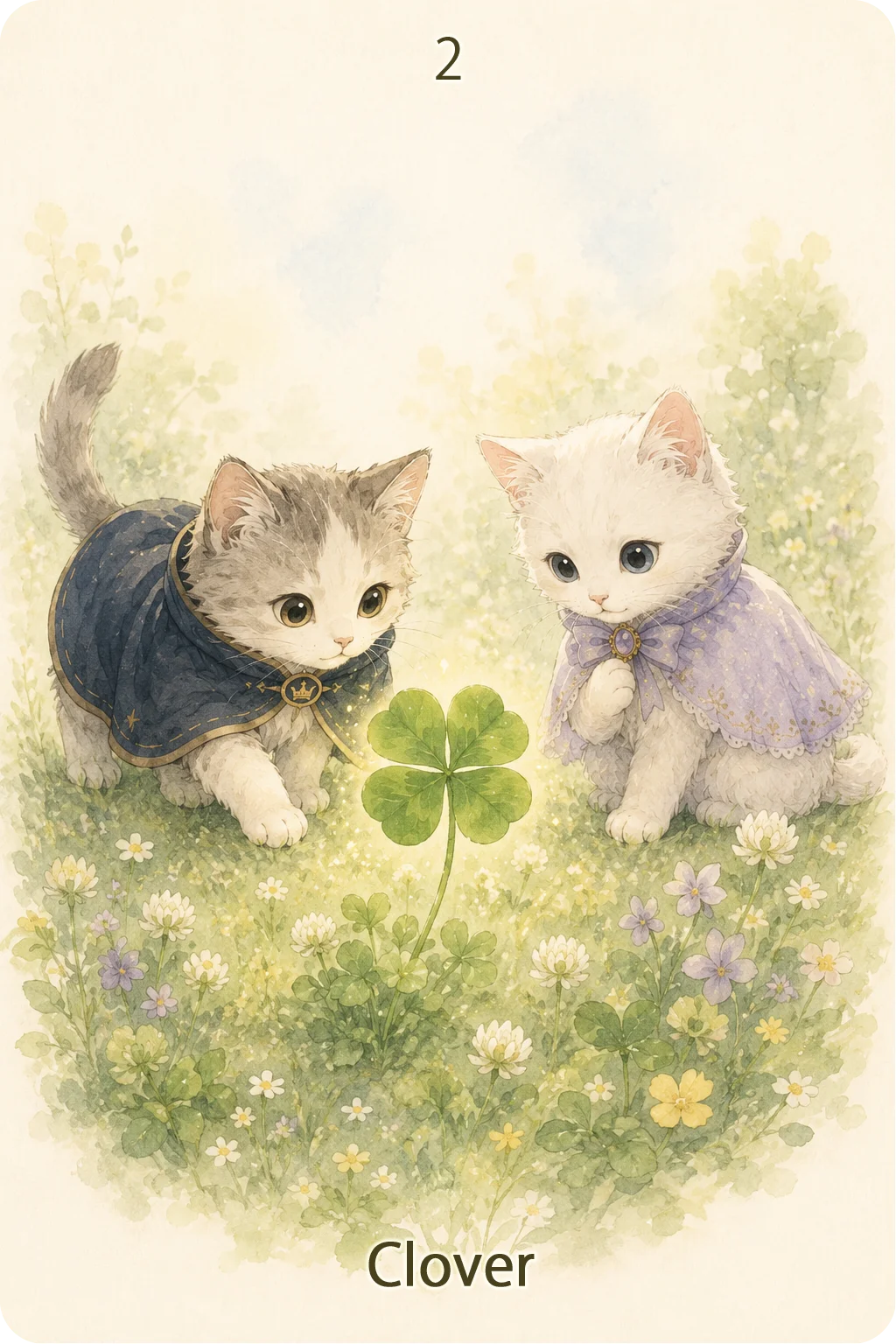
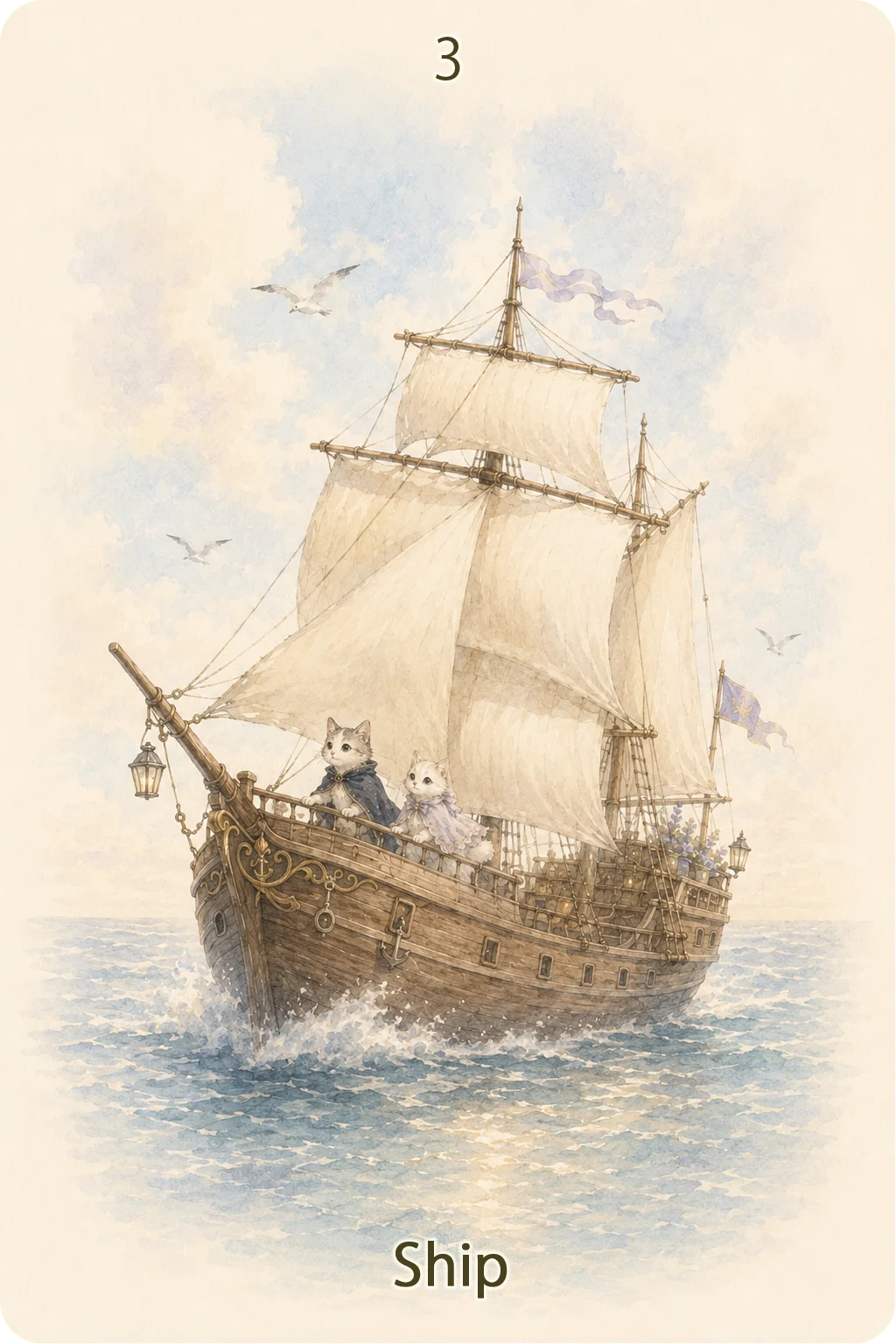
Read from left to right as one continuous sentence: “Welcome news arrives, opening an opportunity to set out for a new place.”
You do not need to use every possible meaning of every card. Choose one word from each that fits the question.The smallest unit: read card 1 as the subject and card 2 as its description. Turn “what” and “in what state” into one sentence.
Make the center the core of the question, the left its background and the right the movement ahead. At first, simply reading from left to right is enough.
Anchor the subject in the center. Read nearer cards as more direct influences and the outer cards as background or a longer flow.
DistanceThe closer a card is to the center or significator, the more directly it tends to have an effect.
DirectionNotice which card a person or movement faces.
CombinationBefore deciding whether it is good or bad, make a noun + adjective or subject + verb.
See the meanings of all 36 Lenormand cardsMAKE IT YOURS
In NTTarot, you can set the number of cards and the name and theme of every position, then drag each card to edit its place and orientation in the layout. Save arrangements you want to use again, or use Free Tarot for a one-time layout. Shape the spread itself around your question.
QUESTION & SPREAD IDEAS
If you are unsure what to ask or which positions to prepare, explore ten examples based on familiar concerns.