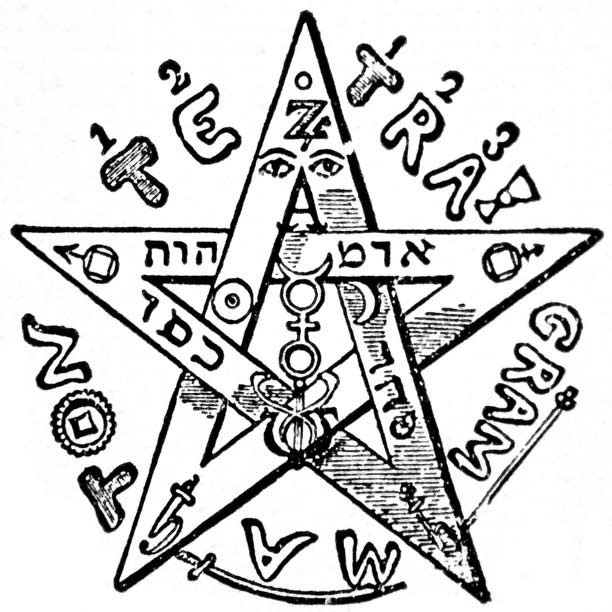
In the previous part, we reached the age of Éliphas Lévi.
Tarot was no longer only a game, and no longer only a pack of cards for divination.
Kabbalah, astrology, alchemy, religion, letters and numbers were all being joined to Tarot by people who wondered whether the world might contain a great structure invisible to the eye.
At the end of the nineteenth century, an organisation appeared in Britain whose members would not merely read about such ideas alone. They would study together, advance through stages and perform rituals.
Hermetic Order of the Golden Dawn
usually shortened to “the Golden Dawn.”
The name sounds intensely mysterious. Secret society, magic, ritual, coded names—the organisation had all of them.
Yet in the history of Tarot it cannot be dismissed as a gathering of eccentric people. From this small order came figures who would transform Tarot’s future.
01 · LONDON, 1888
London, 1888
The Hermetic Order of the Golden Dawn was founded in 1888, in late-Victorian Britain.
A coroner and writer who became central to the order’s founding and administration.
He shaped much of the ritual and teaching system and guided the order’s work.
A physician and Rosicrucian leader who joined Westcott and Mathers as a co-founder.
These three men were at its centre. Westcott and Mathers had also been involved with a Masonic organisation devoted to Rosicrucian ideas.
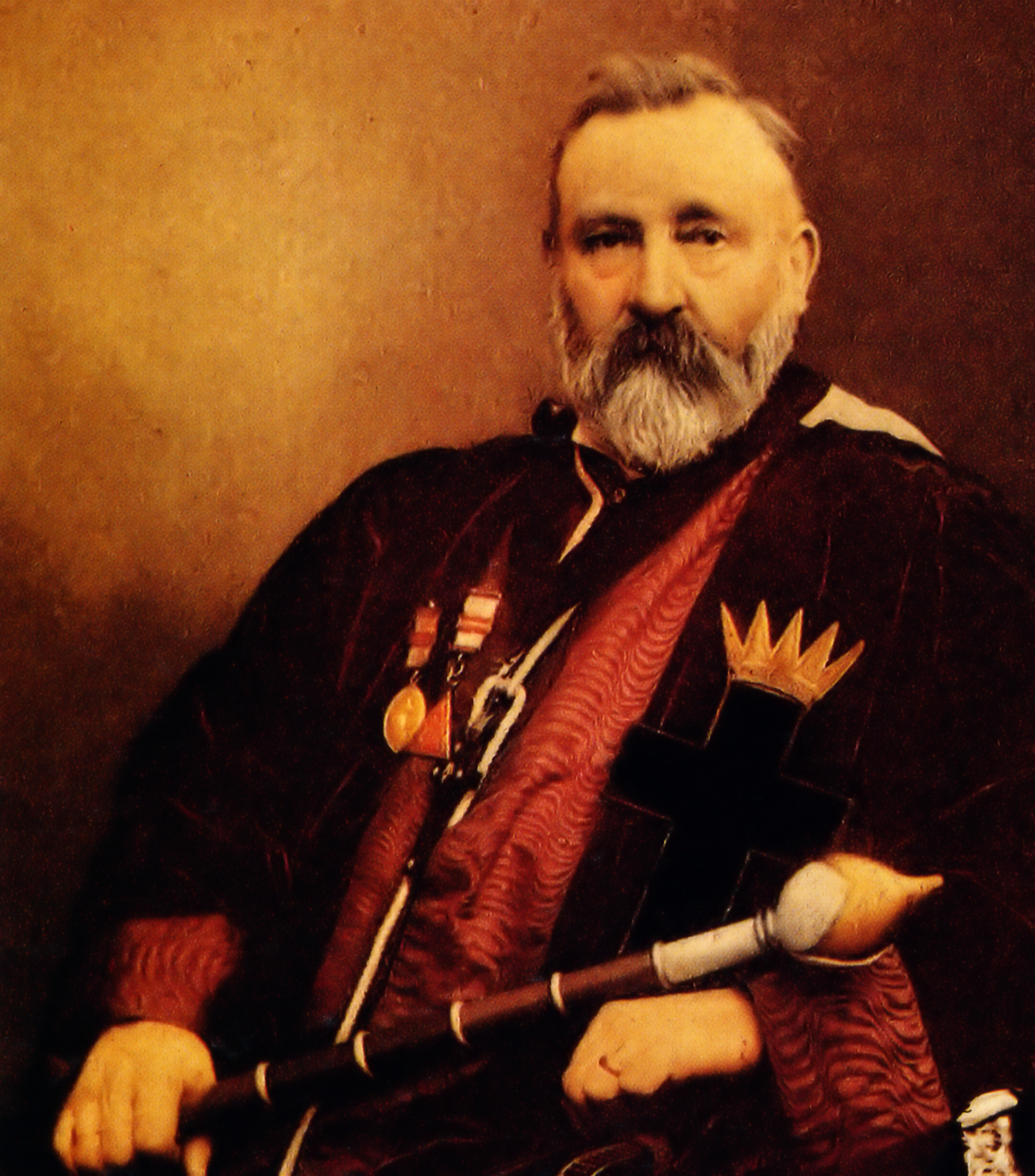
A CO-FOUNDER
William Wynn Westcott 1848–1925A coroner, writer and Rosicrucian who translated Lévi and became a central founder of the Golden Dawn.
Photographer unknown, before 1897 / Wikimedia Commons — Public domain View the image and rights statementCambridge University Press describes the “classical” Golden Dawn of about 1888 to 1903 as a pivotal esoteric order in fin-de-siècle Britain, with four temples in England and another in Paris.[1]
Barely fifteen years is a short life in historical terms. Its influence on later Western magic and Tarot was nevertheless immense.
02 · INITIATION AND GRADES
What did a “secret society”
keep secret?
The phrase secret society deserves a pause. It does not automatically mean that its members were plotting something harmful.
The Golden Dawn had initiation ceremonies, a sequence of grades and material assigned to each stage.
It was not a system in which anyone could buy a textbook and read everything at once.
Reach one stage and the next body of knowledge and ritual became available. Advance further and more complex material followed.
Surviving papers preserve lecture notes for grades labelled with strange equations: 0=0, 1=10, 2=9, 3=8 and 4=7. They cover geometric symbols, astrology, Kabbalah, talismans, divination and even “The Tree of Life in the Tarot.”[2]
This was not an organisation devoted to Tarot alone. Its members tried to study many esoteric traditions as parts of one system.
03 · A SCHOOL OF ESOTERICISM
Something like a
school of magic?
If we force it into a modern comparison, the Golden Dawn was in some ways a school for esoteric thought.
It was not an ordinary school. It had initiations, members could use secret names, and its ceremonies were crowded with symbols.
But its members did not merely gather to do strange things. There was a great deal to learn and remember.
Cambridge scholarship describes the order as a new social and institutional setting for studying and practising ritual magic—work that had often been pursued individually before then.[1]
If Éliphas Lévi had joined many esoteric traditions into one vast worldview, the Golden Dawn can be seen as the group that turned such a worldview into a curriculum people could actually follow.
04 · THE GREAT TABLE OF CORRESPONDENCES
Tarot becomes part of
a vast table of correspondences
In Part 5 we saw Lévi connect Tarot with the Hebrew alphabet. The Golden Dawn went much further.
It connected them all through an intricate web of correspondences.
Golden Dawn papers preserve lectures explicitly joining Tarot to the Tree of Life. The enormous correspondence tables that Aleister Crowley later collected in 777 also inherited much from the Golden Dawn.[2]
Tarot was moving ever farther from a simple rule such as, “When this card appears, this is what it means for your love life.”
All of these could be understood as different expressions of one world. Lévi’s worldview was becoming a detailed working structure.
05 · FOUR SUITS, FOUR ELEMENTS
Consider the four suits
Anyone who reads Tarot today may have encountered these correspondences.
Such links between the four suits and four elements became fundamental to later esoteric Tarot.
The Golden Dawn placed individual cards even more precisely within systems of astrology and Kabbalah.
A card’s meaning no longer stood alone. Its meaning expanded through its relationships with other symbols. That principle would profoundly influence later Tarot.
06 · WOMEN IN THE ORDER
Women were members too
Another fact about the Golden Dawn can be surprising: women participated.
They were not merely companions to male members. Women advanced through the grades and some held important offices.
The actress rose to a high grade and later held an important leadership role in the English branch.
Cambridge research names Mina Bergson Mathers, Florence Farr and Maud Gonne among the order’s notable members.[1]
Many Masonic organisations of the period were overwhelmingly or exclusively male. The Golden Dawn’s willingness to let women study esoteric thought and progress through its grades was therefore a distinctive feature.
Women would also play essential roles in the next chapters of Tarot’s history. One of the most important is about to enter our story.
07 · A REMARKABLE CIRCLE
The remarkable people
who gathered there
One reason the Golden Dawn’s name survives is the people who passed through it.
The future Nobel laureate also became a link between Smith and Golden Dawn teaching.
Alongside her stage career, she rose to a high grade and assumed an important office in the order.
He later developed his own magical system, leading eventually to the Thoth Tarot.
He would later make a new Tarot with Pamela Colman Smith.
Her narrative images created the form of Tarot most widely recognised today.
Despite its short life, the order became an influential setting where writers, artists and esoteric thinkers could meet and investigate magic.
And then there was Pamela Colman Smith. She would go on to draw one of the most famous Tarots in the world.
According to the Morgan Library & Museum, W. B. Yeats introduced Smith to the teachings of the Golden Dawn, and through that world she met Arthur Waite.[3]
Names that once appeared separate are beginning to gather in the same place.
08 · TWO GREAT BRANCHES
Waite and Crowley
Remember two names here: Arthur Edward Waite and Aleister Crowley.
Both were deeply shaped by the world of the Golden Dawn. Yet the Tarots they later created were very different.
1909Rider–Waite–SmithWaite × Pamela Colman Smith
20th centuryThoth TarotCrowley × Frieda Harris
With Pamela Colman Smith, Waite created the deck in 1909 that would later be known as the Rider-Waite-Smith Tarot.[4]
Much later in the twentieth century, Crowley and the artist Frieda Harris created the Thoth Tarot. The Warburg Institute has presented Harris’s original Thoth paintings as major works in the modern history of Tarot.[5]
RWS and Thoth did not arise as unrelated rivals from entirely separate worlds.
Follow their backgrounds and both lead back to Golden Dawn thought. They are like branches growing in different directions from the same tree. That is crucial to understanding Tarot today.
Pamela Colman Smith joins the story here too
Smith deserves a full part of this series, so we will not go deeply into her life yet.
For now, remember only that she was not an artist who happened to receive a sudden Tarot commission from Waite in 1909.
She was already working within cultures of theatre, folklore, symbol and esoteric thought. Yeats introduced her to Golden Dawn teachings, and through that network she met Waite.
The cards she later painted could therefore become more than instructional pictures. They would possess a distinctive narrative life. We will return to that soon.
09 · A SHORT LIFE, A LONG SHADOW
But the Golden Dawn
did not last long
Such influence might suggest a huge organisation that survived for decades. It did not.
Internal conflict, struggles over leadership and problems of organisation eventually split it into several groups.
Cambridge scholarship likewise describes an order that quickly fell into disorder and schism yet profoundly shaped esoteric currents of the twentieth century.[1]
Its life was short, but the thought developed there did not disappear. Its members carried it to other places.
The organisation broke; its ideas escaped
There is a strange possibility here. Had the Golden Dawn continued peacefully, Tarot today might have taken a different form.
Because the order divided, its former members followed separate paths. Waite developed his own mystical approach. Crowley moved toward a very different system of magic. From those paths came different Tarots.
The Golden Dawn itself was short-lived, but the knowledge it gathered and organised travelled out into the world with its members. The result was a vast influence on twentieth-century Tarot.
10 · A CROSSROADS OF KNOWLEDGE
Not only a secret society,
but a crossroads
Has your impression of the Golden Dawn shifted?
It was certainly a secret society, and it certainly performed magical rituals. From a modern historical perspective, many of its claimed traditions lacked evidence and much of its worldview was mystical.
We need not accept everything it taught as ancient truth.
DAWN
Yet Kabbalah, alchemy, astrology, Tarot and Lévi’s magical thought—all the streams followed in this series so far—met there.
Writers, artists and esoteric thinkers received that knowledge and carried it out again in new forms.
The Golden Dawn can therefore be understood as a crossroads of late-nineteenth-century esoteric thought.
For Tarot, the important fact is not only that the organisation was mysterious. It brought together the people and ideas that would make the next Tarots.
SOURCES & IMAGE RIGHTS
Sources and image rights
The order’s founding, dates, members, women and institutional role were checked against Cambridge University Press; its graded lectures and Tarot papers against the Warburg Institute’s Yorke Collection catalogue; Smith’s connection to Yeats and Waite against the Morgan Library; and the Thoth Tarot against Warburg exhibition material.
- 1
Cambridge University Press
The Golden Dawn and the O.T.O. — founders, members, temples and the order’s 1888–1903 periodRead the scholarly overview - 2
The Warburg Institute
Yorke Collection catalogue NS 50–118 — Golden Dawn grade lectures and “Tree of Life in the Tarot”View the archive catalogue - 3
The Morgan Library & Museum
British Occult Revival: Pamela Colman Smith before WaiteRead the curatorial account - 4
The Morgan Library & Museum
Tarot! Renaissance Symbols, Modern Visions — Rider-Waite-Smith Tarot, first published in 1909View the exhibition record - 5
The Warburg Institute
Tarot – Origins & Afterlives — Frieda Harris’s original paintings for Crowley’s Thoth TarotView the exhibition highlights - 6
Wikimedia Commons
William Wynn Westcott in Rosicrucian ceremonial regalia, before 1897 — Public domainView the image and rights statement - 7
Wikimedia Commons
S. L. MacGregor Mathers performing a Golden Dawn ritual, before 1918 — Public domainView the image and rights statement