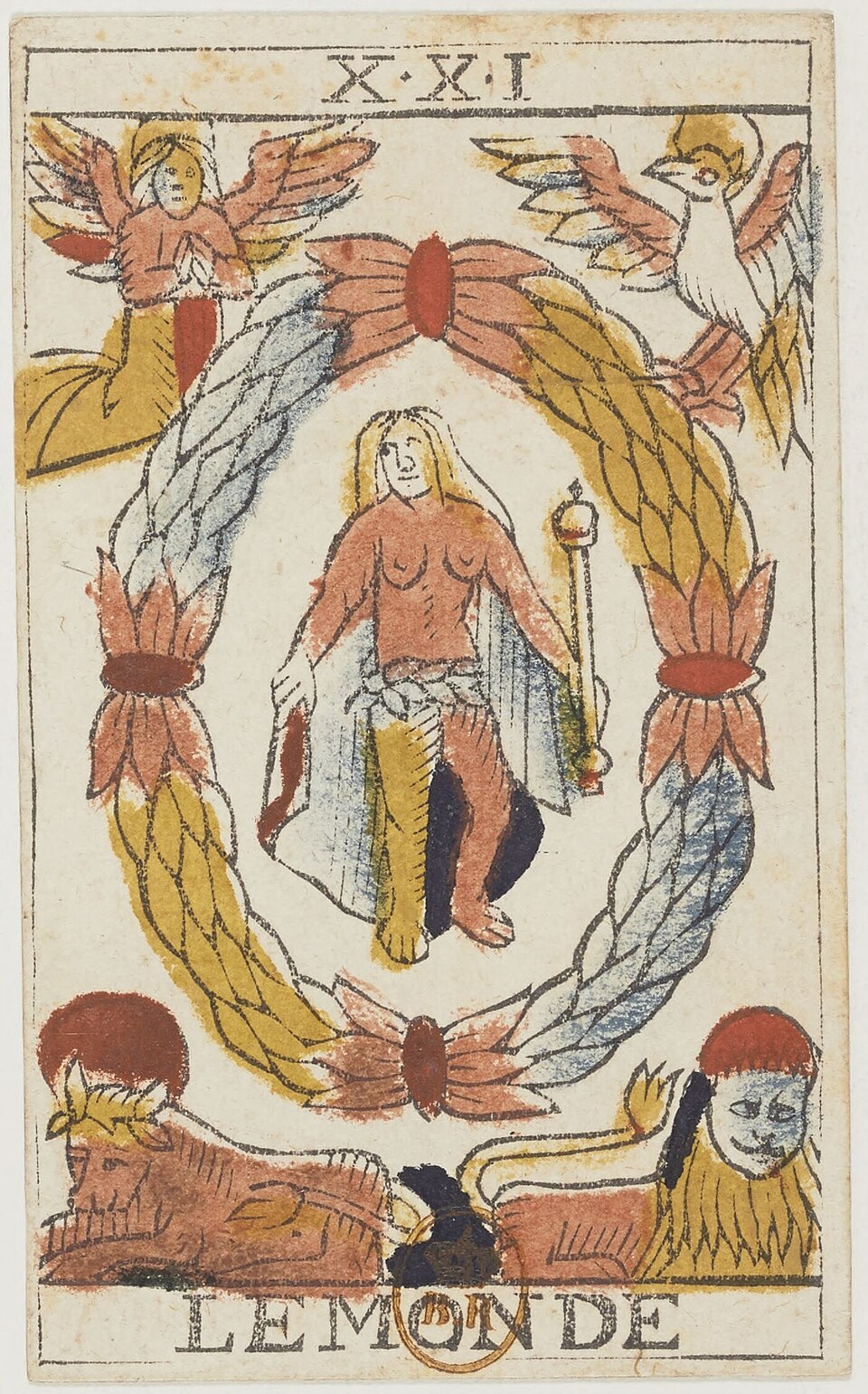
In the previous part, the history of Tarot changed direction.
Tarot had begun as a game. By the end of the eighteenth century, Court de Gébelin and others had begun to suspect that it preserved a secret handed down from antiquity, while Etteilla built a practical system for using Tarot in divination.
Cards once made for play were now also used to read the future and human destiny.
That was already a great transformation. In the nineteenth century, however, Tarot began to assume yet another identity.
It was no longer enough simply to say, “When this card appears, this is what it means.” Perhaps Tarot’s pictures and numbers were connected to God, humanity, the cosmos, letters, numbers, astrology and alchemy.
Could Tarot be a symbolic reflection
of a structure of reality that our eyes cannot see?
This way of thinking spread widely. One of the figures who shaped it most powerfully was Éliphas Lévi.
01 · WESTERN MAGIC
First, what do we mean
by “magic”?
We have suddenly arrived at a phrase that needs unpacking: Western magic.
The word magic may bring to mind a wand, an incantation or a mysterious power that makes something happen.
But the “magic” discussed in nineteenth-century Western esotericism was not limited to such acts.
It was also a way of asking whether some connection or order invisible to us might run between many different systems of thought and symbol.
Of course, no such invisible mechanism has been proved to exist.
What matters here is that people of the period seriously investigated this view of the world.
Éliphas Lévi tried to join many previously scattered esoteric traditions into one great system. Tarot entered that system too.
02 · ÉLIPHAS LÉVI
Who was Éliphas Lévi?
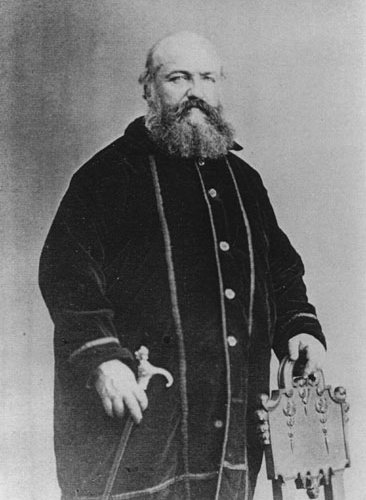
THE OCCULTIST
Éliphas Lévi Alphonse-Louis Constant, 1810–1875A young man trained for the Catholic clergy became one of the defining writers of nineteenth-century Western occultism.
Photographer unknown, c. 1864 / Wikimedia Commons — Public domain View the image and rights statementEven the name is intriguing. It sounds made for an esoteric thinker, and that is because it was not the name he was born with.
His real name was Alphonse-Louis Constant. Born in Paris in 1810, he studied for the Catholic priesthood and progressed as far as the diaconate before leaving that path.[1]
After political activity and years of writing, he increasingly published books on magic and esoteric thought. He adopted the Hebrew-sounding pen name Éliphas Lévi.
A man once preparing for the clergy became one of the central figures of nineteenth-century occultism. It was an unusual life.
03 · HIGH MAGIC
Drawing “High Magic”
as a single world
In the 1850s Lévi published the two-volume work that would become his best known: Dogme et rituel de la haute magie—The Doctrine and Ritual of High Magic.
The Bibliothèque nationale de France records the work under his real name, Alphonse Constant.[2]
Subjects that might appear separate were discussed within the same world.
Lévi did not invent Tarot cards, nor was he the first person to use Tarot for divination.
WHAT HE CHANGEDWhat he transformed was
the worldview through which Tarot could be seen.
04 · KABBALAH
What is Kabbalah?
Here another new word appears: Kabbalah.
In the simplest terms, it is a tradition of mystical thought that developed within Judaism.
What is God? How did the world come into being? How are human beings and God connected? Might the words and letters of scripture contain something beyond their surface meaning? Such questions have been explored across a long history.
Letters themselves can bear meaning
Jewish mystical traditions have long found special significance in the letters of the Hebrew alphabet themselves.
One important early text behind that idea is the Sefer Yetzirah, the Book of Formation.
It describes the creation of the world through ten sefirot and twenty-two Hebrew letters. Modern scholarship places it among the formative mystical works that preceded and deeply influenced later Kabbalah.[3]
SEFIROT10sefirot
+LETTERS22Hebrew letters
This raises another question: what are the sefirot? For now, it is enough to think of them as ten fundamental concepts used to contemplate the workings of God and the world. We can stop again when the story needs more detail.
The crucial fact for this part is that the Hebrew alphabet contains twenty-two letters.
05 · TWENTY-TWO
Twenty-two letters.
And twenty-two cards.
Now return to Tarot.
Lévi joined these two sets. If Tarot had twenty-two trumps and Hebrew had twenty-two letters, perhaps each card corresponded to one letter.
In a Tarot work left by Lévi and published after his death, each of the twenty-two trumps receives its own chapter. The work was translated and edited by William Wynn Westcott, who would become a founder of the Hermetic Order of the Golden Dawn.[4]
Was the link between twenty-two cards and twenty-two letters a discovery?
There is no evidence that fifteenth-century card makers decided to create twenty-two trumps because the Hebrew alphabet had twenty-two letters.
As we have seen since Part 1, Tarot developed as a card game in fifteenth-century Italy. Jewish mystical thought, meanwhile, had its own separate and much longer history.
as a game
its own history
It was not that a Tarot-and-Kabbalah design present from the beginning was finally rediscovered in the nineteenth century.
Lévi and other esoteric thinkers saw a new correspondence and actively joined the two. Historically, that distinction matters.
06 · A NEW CORRESPONDENCE
If the link came later,
does that make it meaningless?
Not at all. This is the most fascinating part of the story.
If Tarot offered only a separate fortune-telling definition for each card, it might simply have developed as one method of divination among many.
But if a card connects to a Hebrew letter, and that letter has a numerical value, and both relate to Kabbalah, astrology and alchemy, then an immense world opens behind a single picture.
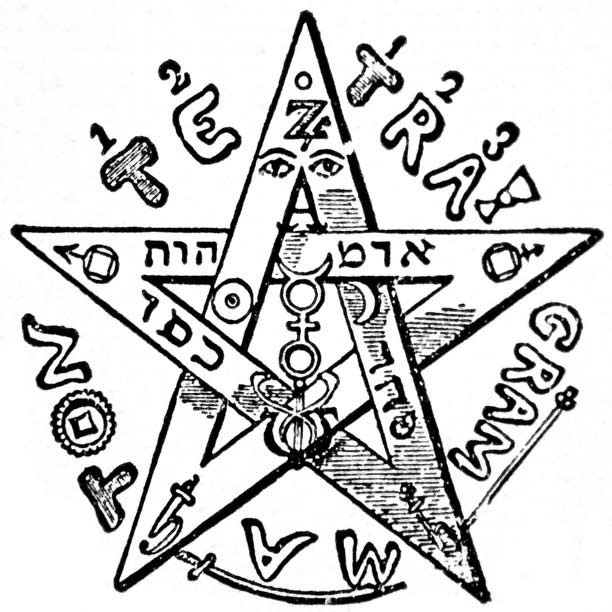
A Tarot card no longer looked like a token for deciding whether fortune was good or bad. It became an entrance into thinking about the world itself.
That was the great change in Tarot after Lévi.
07 · THE HUMAN WISH
Why did people ask
so much of Tarot?
Let us step away from chronology for a moment.
Human beings have always lived in a world they cannot fully understand.
What will
happen next?
Is this choice
the right one?
Why did this
happen?
What do I
truly want?
Across time, people have wanted to know the future and understand destiny—to receive even the smallest clue from what they could not see.
Card reading, astrology and many other divinatory arts are not unrelated to that desire.
The worldview built by Lévi and others added one more idea.
THE LARGER STORYPerhaps the world contains an order
that we are not yet able to see.
Drawing a card might then feel like more than selecting one picture by chance. It might feel like touching some part of that larger world. The intellectual setting for such a feeling was gradually being constructed.
Whether it is true is a different question
History and science have not proved that Tarot is connected to invisible forces in the cosmos. Nor has it been shown that the correspondences between Kabbalah and Tarot existed in antiquity.
We should not blur that distinction.
But it is also unnecessary to dismiss the whole endeavour as meaningless.
The people who built these systems, and the people who believed in or felt drawn to them, were seeking something.
They wanted to understand an uncertain world, glimpse an invisible future, choose without regret, know where they stood and learn what mattered.
Those desires may not be so different from our own.
08 · QUESTIONS AND ANSWERS
Does Tarot hold
an answer?
We do not have to settle that question here.
Does something invisible choose the card? Is it only chance? Does the mind discover meaning in a random picture? None of these possibilities is easy to dismiss or decide.
Yet a chance card can reveal a feeling we had not noticed. It can suggest another angle. It can make us pause and think a little longer before taking the next step.
Tarot may not guarantee the future, but we can use Tarot to hold a conversation with ourselves.
Nor do we have to erase the small wonder contained in the question, “Why this card, now?”
Perhaps something invisible exists. Perhaps it does not. Tarot can still be enjoyed without a final answer.
09 · LÉVI'S LEGACY
What Lévi left behind
Éliphas Lévi did not create this way of thinking single-handedly. Esoteric traditions preceded him, and many later thinkers revised his system and made it far more elaborate.
But Lévi treated Tarot as something more than a pack used for divination.
By joining Tarot with letters, numbers, religion, Kabbalah and magic, he expanded it into a symbolic system that might reflect even the world’s unseen structure.
Whether it truly revealed the world’s secrets is one question. The historical force lay in giving later readers a story and a system through which they could imagine that it might.
Lévi became an important figure in the nineteenth-century revival of Western occultism, and his writings passed into the next generation. Cambridge University Press likewise describes him as instrumental in that revival.[5]
10 · TOWARD THE GOLDEN DAWN
The people who inherited
his ideas
The story now moves forward again. The world Lévi described did not end with him.
After his death, readers in Britain studied his work. One of them was William Wynn Westcott, who would translate Lévi’s Tarot manuscript into English.
In 1888 Westcott became one of the founders of a new esoteric order.
Its name was the Hermetic Order of the Golden Dawn.[6]
Lévi did not found the Golden Dawn. Yet a clear intellectual line runs from his expanded world of Tarot and Western magic to the next generation’s more detailed system.
Within the Golden Dawn, the correspondences between Tarot, Kabbalah, astrology, alchemy and ritual magic would be worked out in much finer detail.
Arthur Edward Waite, Aleister Crowley and Pamela Colman Smith—figures no modern history of Tarot can avoid—would all become connected to that world.
SOURCES & IMAGE RIGHTS
Sources and image rights
Lévi’s identity and bibliography were checked against the Bibliothèque nationale de France; his Tarot writings and influence on nineteenth-century occultism against Cambridge University Press; and the Sefer Yetzirah against an Encyclopaedia Judaica reference entry. Both reproduced images are marked public domain on Wikimedia Commons.
- 1
Bibliothèque nationale de France
Authority record: Constant, Alphonse (1810–1875)View the authority record - 2
Bibliothèque nationale de France
Éliphas Lévi, Dogme et rituel de la haute magieView the catalogue record - 3
Encyclopaedia Judaica / Encyclopedia.com
Sefer Yezirah — ten sefirot and twenty-two Hebrew lettersRead the reference entry - 4
Cambridge University Press
Éliphas Lévi, The Magical Ritual of the Sanctum Regnum, edited and translated by W. Wynn WestcottView the book and all twenty-two chapters - 5
Cambridge University Press
Cambridge Library Collection — Spiritualism and Esoteric KnowledgeRead the assessment of Lévi’s influence - 6
Cambridge University Press
The Golden Dawn and the O.T.O. — founders and the order’s 1888–1903 periodRead the scholarly overview - 7
Wikimedia Commons
Portrait of Éliphas Lévi, c. 1864 — Public domainView the image and rights statement - 8
Wikimedia Commons
Éliphas Lévi’s Pentagram of the Microcosm, 1855 — Public domainView the image and rights statement